
Exploring Seattle Naturalists' Favorite Tidepooling Spots
My friends and I have a running joke about sharing our "spots" like precious secrets. If you're a mushroom forager, you likely know exactly what I mean. But here's the thing: having a great spot is about so much more than just location. It's about understanding the rhythm of the seasons, the timing when conditions align perfectly, and reading the landscape like Nancy Drew and her clues. Whether you're tidepooling or foraging for chanterelles, our best teacher is experience.
This guide is a basic overview about tidepooling in the Pacific Northwest. Consider it a foundation: what tidepooling really is, when to venture out for the best experience, and where you'll find some of our favorite coastal spots. Though there's so many more spots to tidepool, so go explore and find your favorite.
The Puget Sound has some of the best biodiverse tidepool environments. Rocky shorelines, nutrient-rich waters, and dramatic tidal ranges create perfect conditions for marine life. Here are the spots that have become our go-to destinations, each offering its own character and treasures.
Check Tide Predictions at NOAA for Elliot Bay: https://tidesandcurrents.noaa.gov/noaatidepredictions.html?id=9447130&legacy=1
Tides change depending on location. Always check the tides at a specific location.
Tidepooling near ferry docks can be dangerous. Stay clear of active ferry lanes, slippery pilings, and deep water. Always supervise children, wear appropriate footwear, and be aware of tides and currents.
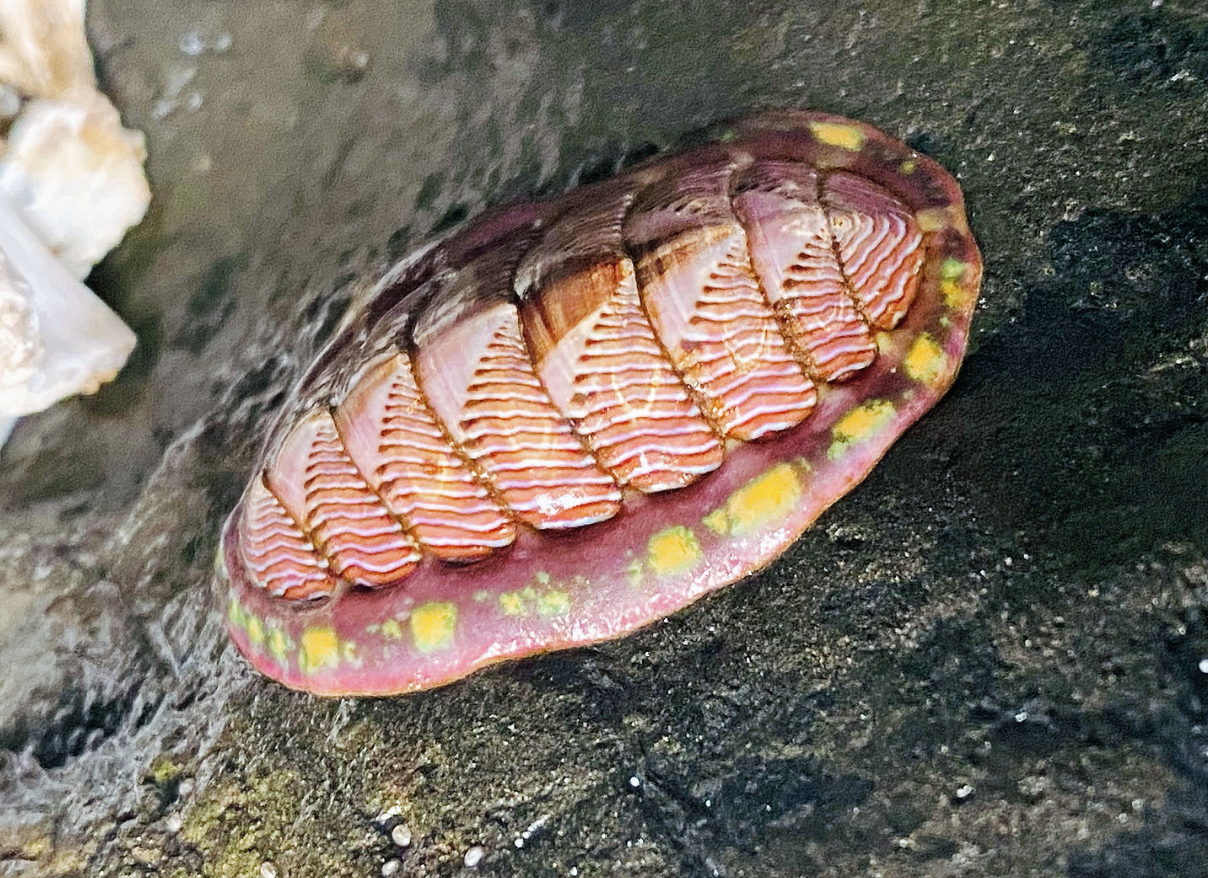
Lined chiton (Tonicella lineata) at Constellation Park, Seattle
Tidepool Locations:
1. Edmonds Ferry Dock, Seattle (map)
2. Richmond Beach, Seattle (map)
3. Golden Gardens, Seattle (map)
4. Constellation Park, Seattle (map)
5. Fauntleroy Ferry Dock, Seattle (map)
6. Seahurst Beach, Seattle (map)
7. Fay Bainbridge Park, Bainbridge Island (map)
8. Rockaway Beach, Bainbridge Island (map)
9. Fort Ward, Bainbridge Island (map)
10. Vashon Ferry Dock, Vashon (map)
11. Dave Mackie Park, Whidbey Island (map)
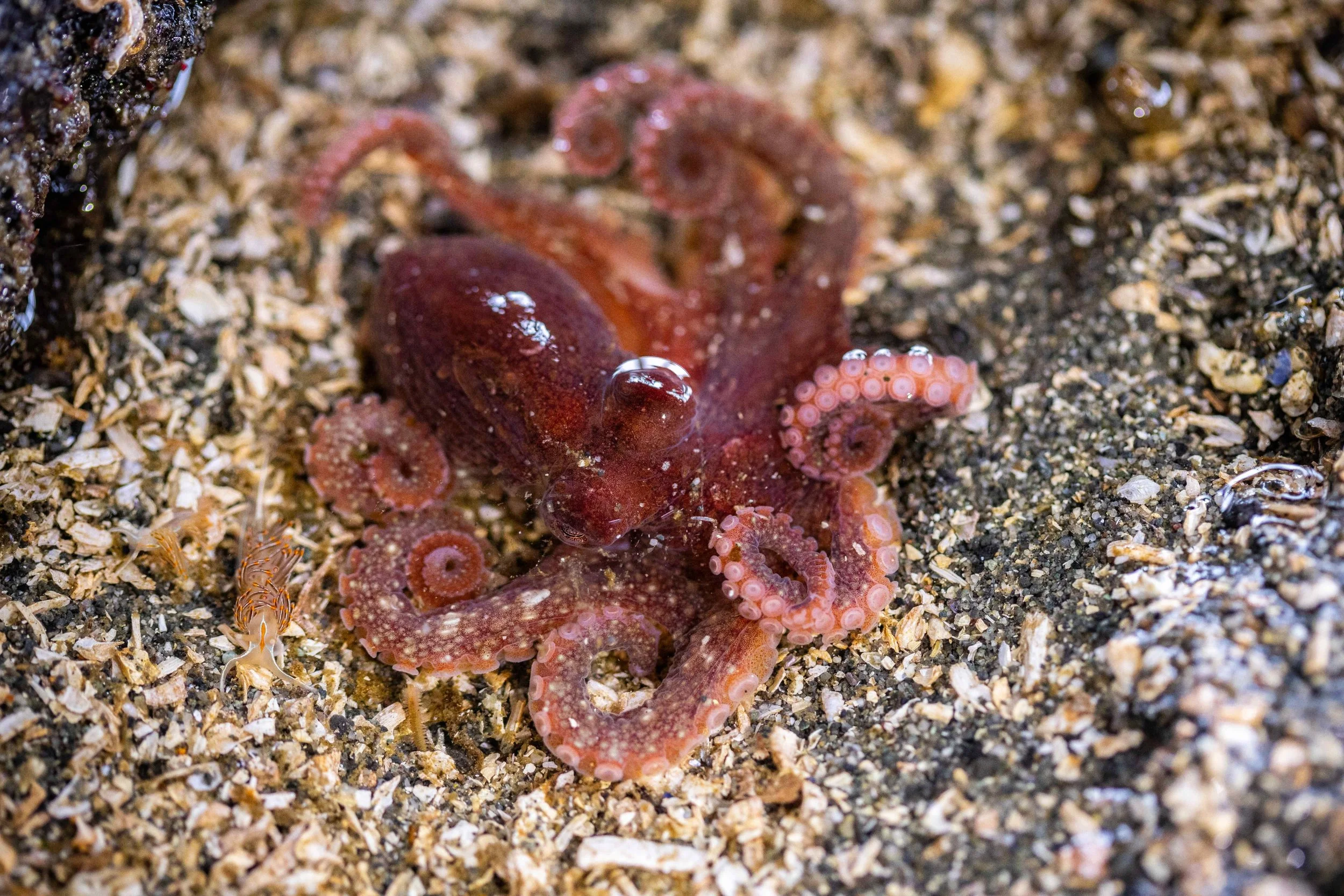
Pacific red octopus (Octopus rubescens) seen beside Thick-Horned Nudibranchs (Hermissenda crassicornis)
Tidepooling Etiquette:
The wonder of tidepooling comes with responsibility. These ecosystems are remarkably resilient yet also vulnerable to human impact. Following these principles ensures both your safety and the health of these coastal communities.
Leave everything as you found it. Every creature, every rock, every shell plays a role in the tidepool's delicate balance. Removing animals or plants (even temporarily) can disrupt survival strategies and food webs.
Watch where you step. It's easy to focus on what's in the pools and forget what's underfoot. Sea stars, anemones, and other creatures cling to rocks that may look bare. Move slowly and deliberately.
Don't rearrange the furniture. Rocks provide shelter, shade, and protection. Flipping them over or moving them exposes animals to predators, desiccation, and stress. It is tempting to lift a rock to peek underneath, but that’s someone’s home and it’s best not to do so.
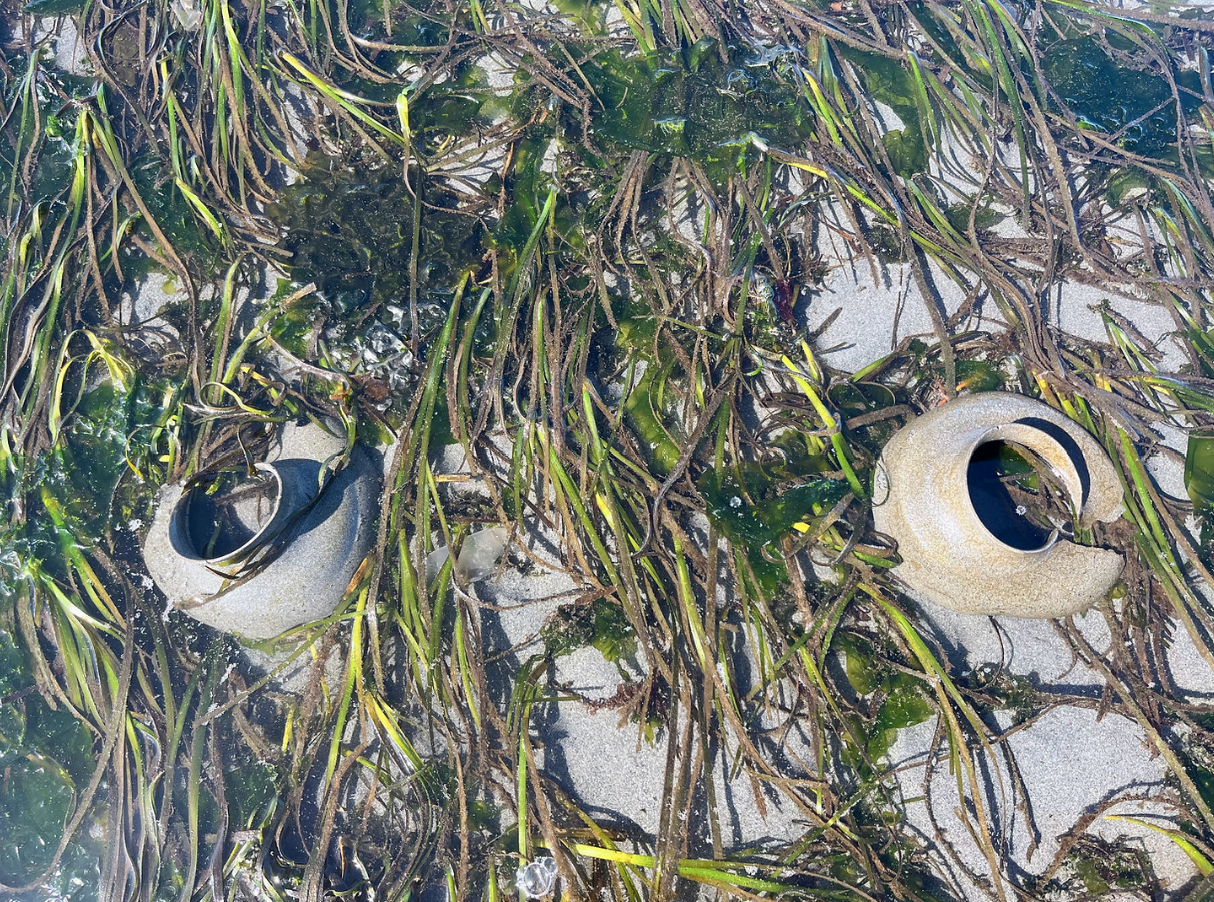
Lewis' Moon Snail (Neverita lewisii) egg collars which may contain thousands of tiny eggs!
Packing for Success
The right gear transforms a good tidepooling trip into a great one:
Waterproof footwear with aggressive tread (this is your most important item)
Sun protection kit: Wide-brimmed hat, reef-safe sunscreen, polarized sunglasses
Hydration and snacks to sustain your exploration
Small bucket or clear water bottle for temporary up-close viewing
Camera or smartphone in a waterproof case
Field guide or identification app to put names to the creatures you encounter
Basic first aid kit for treating minor cuts from barnacles or scrapes from rocks
Tide chart (digital or printed) even if you checked before leaving home
Have Fun!
Tides shift, seasons change, and different creatures become active at different times. Each trip to the shore is an opportunity to witness something new, to understand a little more about the intricate web of life that exists where the sound meets land, and learn with others who are out in the tidepools with you.