
Daytime Low Tide Season is Back!!
Daytime low tide season is back on the Puget Sound!!
Mark your calendars for April 18–22, May 16–21, June 12–18, June 29–July 1, July 11–16, and August 9–13. The most extreme lows hit May 18 and June 15.
Below is a list of tides under -1.6’, our preferred range for tidepooling.
Visit our Tidepooling guide which covers local tidepool spots around Seattle public parks, shares essential safety tips, and emphasizes low-impact practices to help protect these fragile ecosystems while you explore. https://www.seattlenaturalists.com/blog/tidepooling
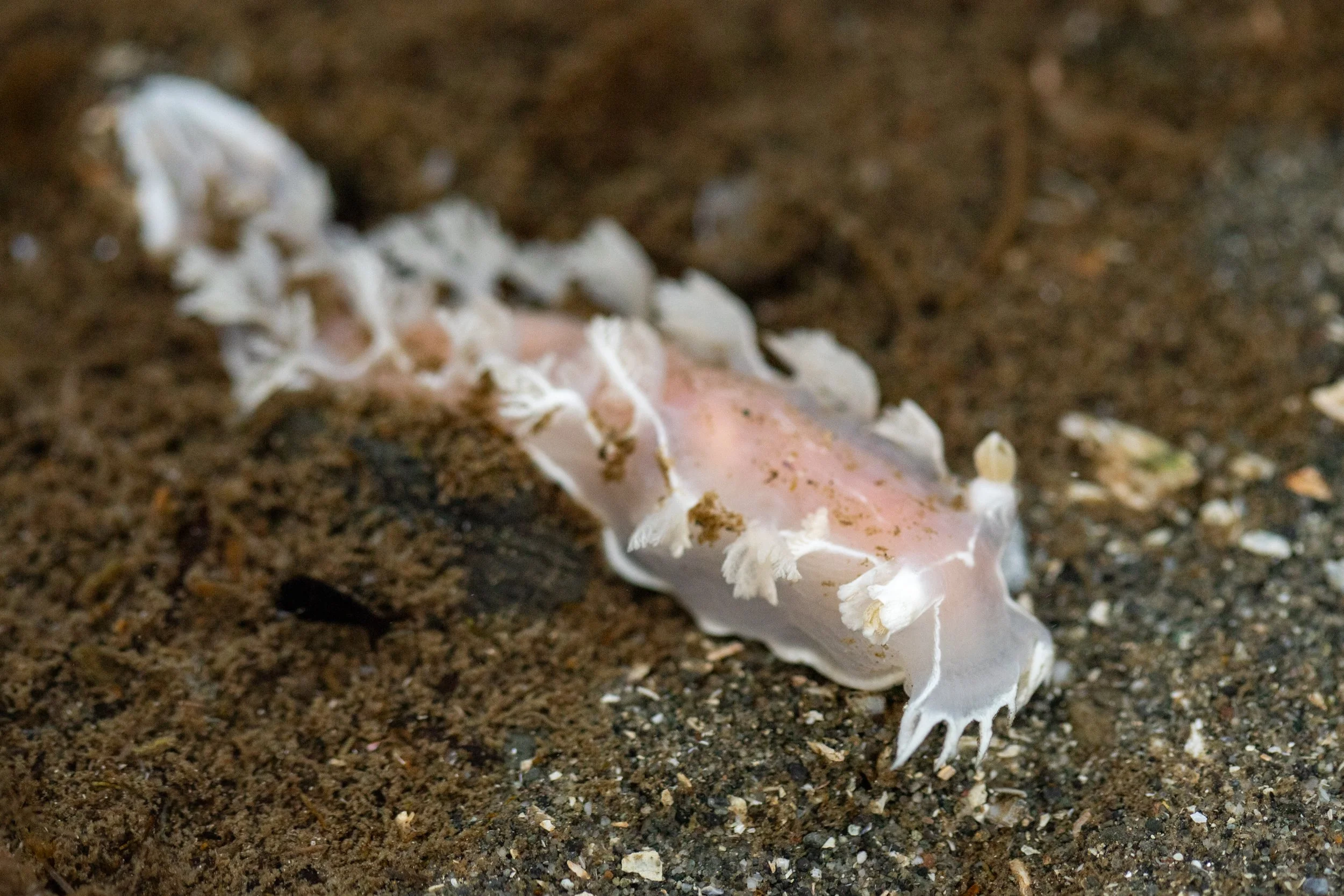
Diamondback tritonia (Tritonia festiva), a type of Nudibranch that lives in the Puget Sound.
April 2026
Saturday, April 18: 12:15pm, L -2.18'
Sunday, April 19: 12:58pm, L -2.85'
Monday, April 20: 1:45pm, L -2.98'
Tuesday, April 21: 2:36pm, L -2.60'
Wednesday, April 22: 3:32pm, L -1.83'
May 2026
Friday, May 15: 10:27am, L -1.84'
Saturday, May 16: 11:07am, L -3.07'
Sunday, May 17: 11:51am, L -3.82'
Monday, May 18: 12:37pm, L -4.04'
Tuesday, May 19: 1:26pm, L -3.73'
Wednesday, May 20: 2:18pm, L -2.97'
Thursday, May 21: 3:13pm, L -1.86'
June 2026
Monday, June 1: 12:11pm, L -1.90'
Tuesday, June 2: 12:48pm, L -1.79'
Friday, June 12: 9:15am, L -1.79'
Saturday, June 13: 10:00am, L -3.06'
Sunday, June 14: 10:46am, L -3.92'
Monday, June 15: 11:33am, L -4.30'
Tuesday, June 16: 12:22pm, L -4.20'
Wednesday, June 17: 1:11pm, L -3.64'
Thursday, June 18: 2:00pm, L -2.66'
Monday, June 29: 11:16am, L -1.73'
Tuesday, June 30: 11:52am, L -1.81'
July 2026
Wednesday, July 1: 12:29pm, L -1.77'
Saturday, July 11: 8:49am, L -2.29'
Sunday, July 12: 9:40am, L -3.16'
Monday, July 13: 10:30am, L -3.68'
Tuesday, July 14: 11:20am, L -3.80'
Wednesday, July 15: 12:08pm, L -3.49'
Thursday, July 16: 12:55pm, L -2.72'
August 2026
Sunday, August 9: 8:29am, L -1.91'
Monday, August 10: 9:26am, L -2.40'
Tuesday, August 11: 10:19am, L -2.63'
Wednesday, August 12: 11:07am, L -2.48'
Thursday, August 13: 11:52am, L -1.91
****
NOAA Tide Predictions from Elliot Bay, Seattle (Station 9447130).
For a full list of tides or to find charts near you, visit NOAA Tide Prediction page: https://tidesandcurrents.noaa.gov/tide_predictions.html
****
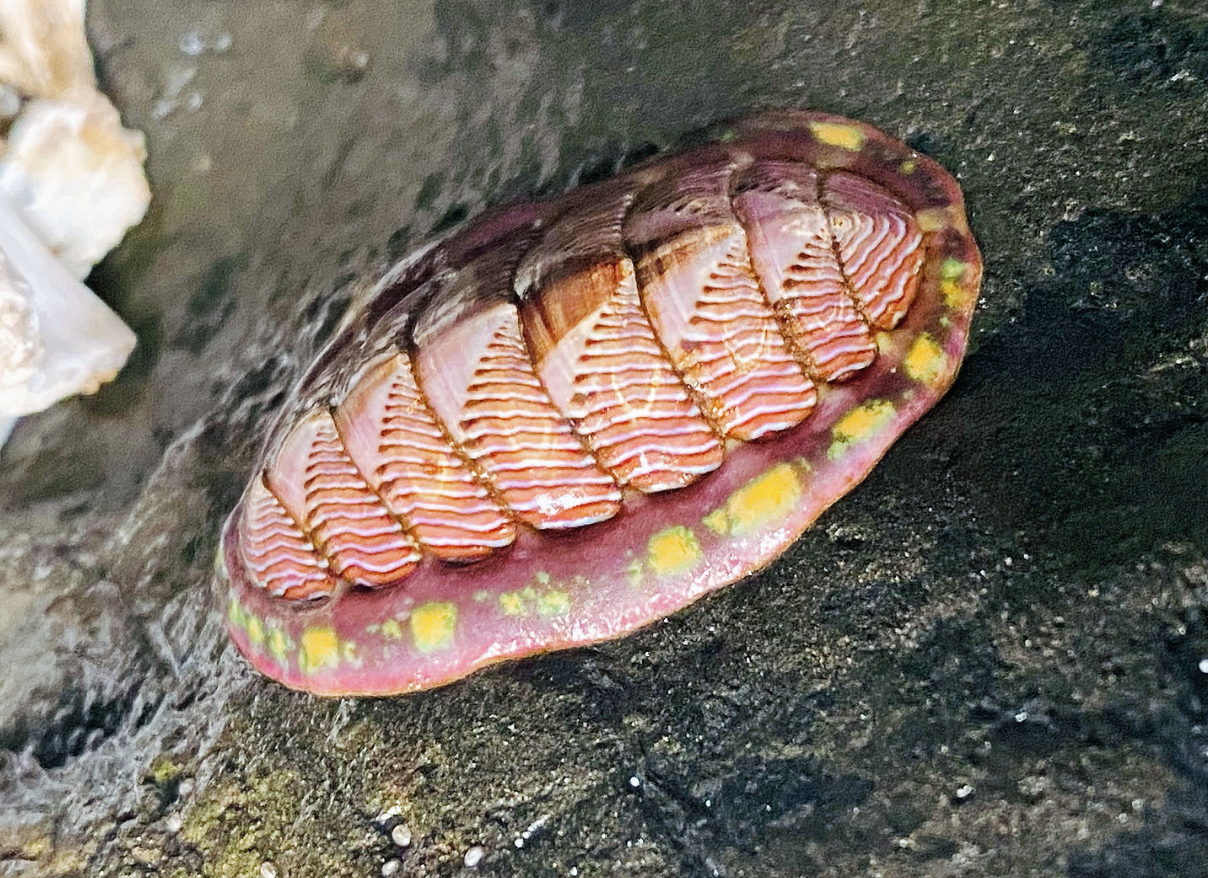
Lined chiton (Tonicella lineata) at Constellation Park, Seattle
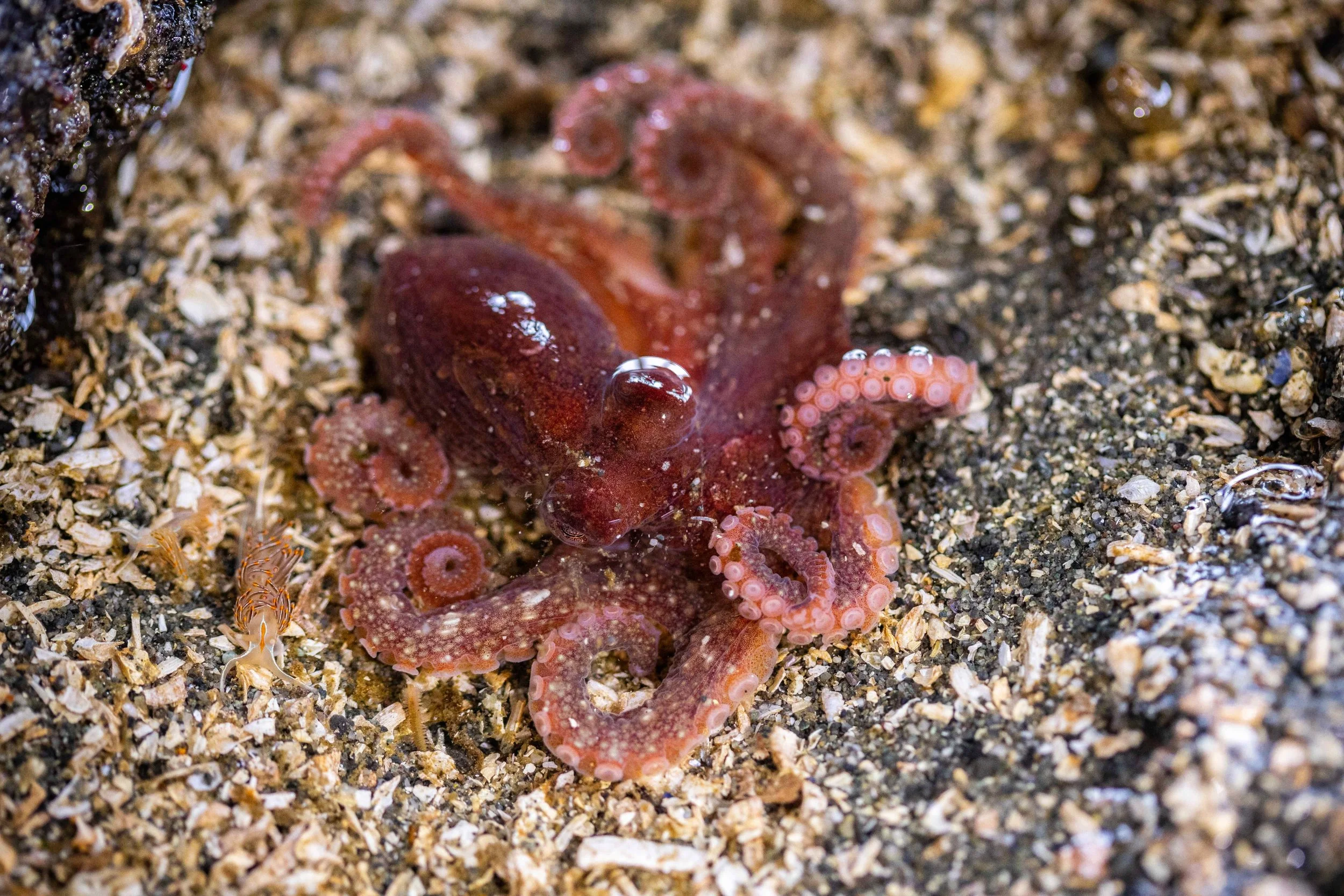
Pacific red octopus (Octopus rubescens) seen beside Thick-Horned Nudibranchs (Hermissenda crassicornis)
Tidepooling Etiquette:
The wonder of tidepooling comes with responsibility. These ecosystems are remarkably resilient yet also vulnerable to human impact. Following these principles ensures both your safety and the health of these coastal communities.
Leave everything as you found it. Every creature, every rock, every shell plays a role in the tidepool's delicate balance. Removing animals or plants (even temporarily) can disrupt survival strategies and food webs.
Watch where you step. It's easy to focus on what's in the pools and forget what's underfoot. Sea stars, anemones, and other creatures cling to rocks that may look bare. Move slowly and deliberately.
Don't rearrange the furniture. Rocks provide shelter, shade, and protection. Flipping them over or moving them exposes animals to predators, desiccation, and stress. It is tempting to lift a rock to peek underneath, but that’s someone’s home and it’s best not to do so.
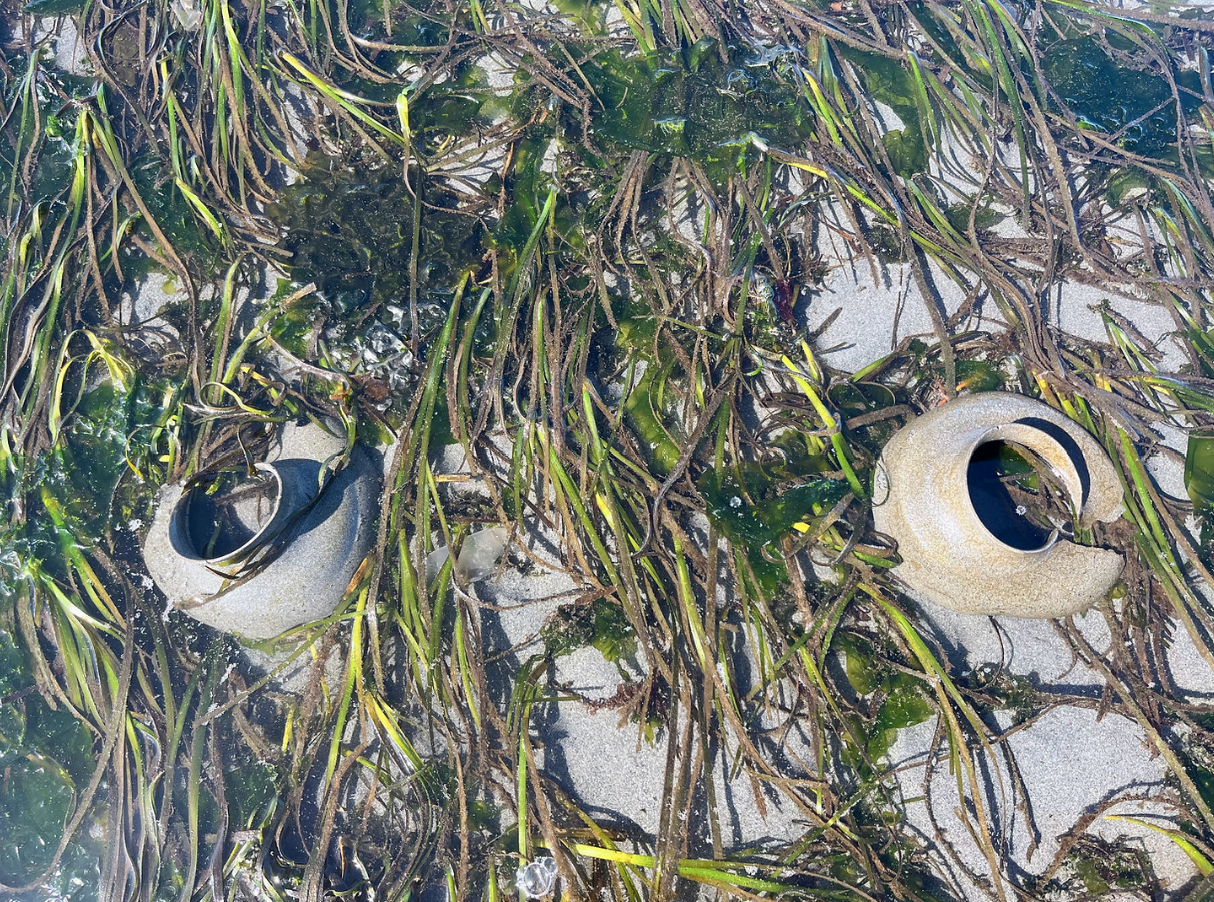
Lewis' Moon Snail (Neverita lewisii) egg collars which may contain thousands of tiny eggs!